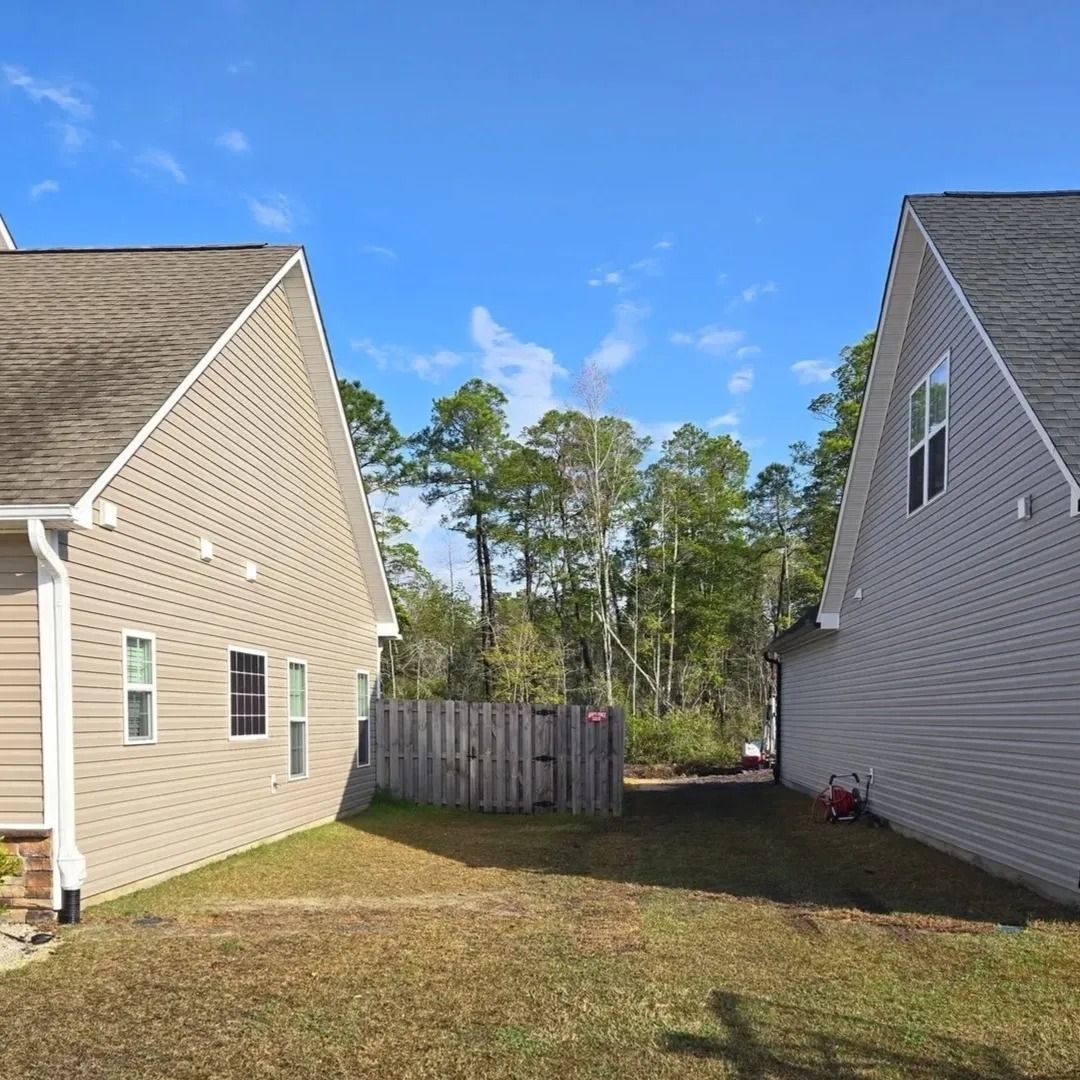

Gutter Discharge That Protects Instead of Erodes
Roof Run-off Systems in Jacksonville for foundation erosion, landscape washout, and concentrated water flow that undermines driveways
When gutters dump hundreds of gallons directly next to your foundation during a two-inch rain, that concentrated flow erodes soil faster than it can absorb water, creating channels that route even more runoff toward vulnerable areas. Patriot Property and Lawn Services LLC installs roof runoff systems that capture gutter discharge and convey it through buried pipe to dispersal areas far enough from structures that released water can't return through soil saturation or surface flow. Properties in Jacksonville need this when downspouts empty onto grade within ten feet of foundations, when erosion trenches form under gutter discharge points, or when landscaping near the house stays perpetually wet despite adequate soil drainage elsewhere in the yard.
Controlled water discharge prevents foundation undermining, eliminates erosion channels that cut through planting beds and hardscaping, and protects landscaping by distributing roof runoff across areas designed to handle high volumes. Systems integrate with overall drainage plans to ensure water captured from the roof discharges where it supports rather than harms the property.
Request a site consultation to calculate your roof's runoff volume and identify discharge locations that won't create new saturation problems.
Why Roof Water Requires Separate Handling
Roof runoff concentrates rainfall from several hundred square feet into a few discharge points—a single downspout from a 1,000-square-foot roof section delivers over 600 gallons per inch of rain, a volume that exceeds soil absorption capacity when released directly onto grade. Buried pipe systems collect this discharge and transport it to dry wells, surface dispersal areas, or connections with storm drainage infrastructure that handles the volume without erosion.
Once the system routes water correctly, you'll notice soil near your foundation stays stable instead of washing away with each storm, landscaping plants survive near downspout locations without root rot, and driveways or walkways adjacent to the house stop developing settling or undermining from concentrated water flow. The area immediately around your foundation dries out faster after rain because water no longer pools where gutters discharge.
Effective runoff systems include cleanouts at direction changes so debris accumulation can be cleared without excavating pipe, and they're sized based on roof area and local rainfall intensity—undersized systems back up during heavy storms and defeat the purpose of controlled discharge, while systems without slope management allow standing water in pipes that eventually freeze or become sediment traps.
Answers to Frequent Roof Runoff Questions
Roof drainage in coastal regions must handle intense rainfall rates during tropical weather systems while preventing discharge areas from becoming saturated during extended wet periods. System design accounts for both peak flow and cumulative volume over multi-day rain events.
What makes roof runoff more damaging than rain that falls naturally across the yard?
Roofs concentrate rainfall from large areas into small discharge points, creating flow rates that erode soil and exceed local absorption capacity—natural rainfall distributes across the entire property at rates soil can typically absorb, while gutter discharge delivers the equivalent of hours worth of natural rain in minutes at a single location.
How far from the foundation should roof water discharge to prevent moisture problems?
Discharge points should be at least ten feet from foundation walls in well-draining soil, and farther in clay or poorly draining conditions—the goal is releasing water where it can't return to the foundation through subsurface saturation or surface flow back toward the house.
When should roof runoff connect to underground drains instead of surface splash blocks?
Use underground systems when your property lacks sufficient slope for surface flow away from the house, when discharge near the foundation creates erosion regardless of splash block use, or when you need to convey water across driveways or walkways without creating surface hazards from flowing water.
What prevents underground runoff pipes from clogging with leaves and debris?
Systems include debris filters at gutter connections and cleanout access points at direction changes—filters catch most organic material before it enters the pipe, and cleanouts allow periodic flushing to remove silt accumulation without excavating buried sections.
How do roof runoff systems integrate with French drains or storm drainage?
Roof systems can discharge into the same dry wells or storm drains that serve subsurface drainage, but they require separate collection pipes sized for roof area rather than groundwater volume—combining systems at the discharge point prevents redundant excavation while keeping different water sources separated upstream for proper sizing and filtration.
Patriot Property and Lawn Services LLC calculates runoff volumes based on your actual roof area and designs discharge locations that account for your property's existing drainage patterns. Schedule an evaluation to review how your current downspout discharge affects foundation stability and landscape erosion.