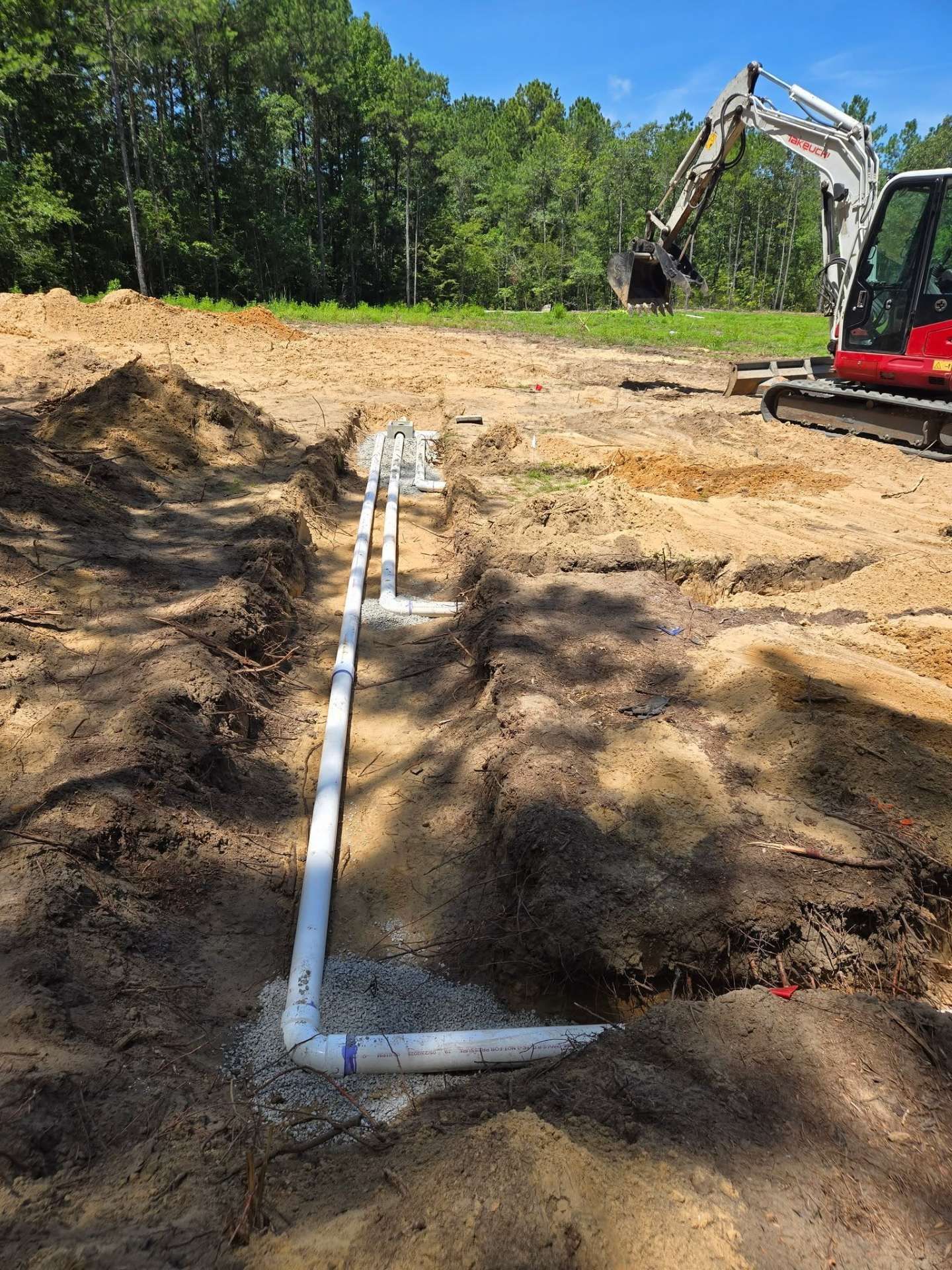

Septic Systems Installed Before Foundations Go In
New Construction Installation in Jacksonville for residential building projects requiring complete septic system placement and permitting
New homes and residential construction projects in Jacksonville require complete septic system installation before final occupancy approvals are issued. Patriot Property and Lawn Services LLC coordinates site evaluations, permitting through county health departments, excavation, tank and drain field installation, and final inspections alongside builders and property owners. The timeline for septic installation must align with grading, foundation work, and utility placement to avoid conflicts with other trades or equipment access issues on the construction site.
Site evaluation determines where the drain field can be placed based on soil type, water table depth, setback requirements from wells and property boundaries, and how the land slopes relative to the home's foundation. Permits are submitted with perc test results and system design plans that specify tank size, drain field dimensions, and distribution methods. Once approved, excavation begins, followed by tank installation, distribution device placement, and drain line layout using code-compliant materials.
Schedule a new construction septic planning session to align system installation with your building timeline and site grading requirements.
How Installation Coordinates With Construction Phases
Septic installation happens after rough grading but before final landscaping, allowing equipment access for excavation while protecting completed finish work. Tank placement must account for future driveway locations, drainage patterns, and where heavy equipment will travel during later construction phases. Distribution lines are installed at precise depths and slopes to maintain gravity flow or pump-assisted distribution depending on site elevation and water table levels.
Once installation is complete and inspections pass, the system handles all household wastewater without requiring connection to municipal sewer lines. Drains operate normally, toilets flush without hesitation, and the drain field disperses effluent below ground without surfacing or creating wet spots in the yard. Proper grading and system placement during installation prevent the premature saturation issues that occur when drain fields are installed too shallow or in areas with inadequate soil drainage.
The installation includes coordinating with other trades to locate water lines, electrical conduit, and irrigation systems away from drain field areas, preventing accidental damage during or after construction. Quality materials—concrete tanks, schedule 40 pipe, and gravel meeting gradation standards—are used throughout to support decades of operation without component deterioration or structural failure.
Common Questions About This Service
Builders and homeowners planning new construction often ask about permitting timelines, system sizing, and how septic installation fits into the overall project schedule.
What determines the size of the septic system for a new home?
Bedroom count drives tank and drain field sizing under state wastewater regulations, with larger homes requiring increased capacity to handle peak daily flow volumes.
How long does permitting take before septic installation can begin?
County health departments typically review site evaluations and perc test results within two to four weeks, though timelines vary based on application volume and whether additional testing is required.
When during construction should septic installation be scheduled?
Installation occurs after rough grading and before final landscaping, allowing equipment access while protecting completed site work and preventing soil compaction over the drain field.
How does soil type in Jacksonville affect drain field design?
Sandy soils common in Eastern North Carolina allow faster effluent percolation, while clay layers or high water tables require modified drain field designs with increased separation distances and distribution line spacing.
What happens if the original drain field location conflicts with other site features?
System layout is adjusted during the planning phase to avoid wells, property setbacks, and utility easements while maintaining required separation distances and adequate soil conditions. Onsite Wastewater systems take priority over other utilities. If a conflict occurs, the contractor will coordinate with the local health department and property owner to find a viable solution.
Patriot Property and Lawn Services LLC manages new construction septic installations by coordinating with builders, securing permits, and completing installation on schedule to avoid construction delays. Contact the team to discuss system design and permitting for your upcoming residential project.