
Groundwater That Routes Away From Foundations
French Drains in Jacksonville for saturated crawlspaces, wet basements, and landscaping that stays waterlogged days after rain
Subsurface water doesn't always appear as standing puddles—sometimes it shows up as foundation walls that stay damp, crawlspace insulation that sags from moisture weight, or landscape areas where grass dies because roots can't get oxygen through saturated soil. French drains intercept groundwater before it reaches these vulnerable areas by creating a subsurface pathway where water follows the lowest available route through gravel and perforated pipe instead of migrating toward your foundation. Patriot Property and Lawn Services LLC installs these systems based on where your property's water table rises during wet periods and where natural grade allows gravity discharge without pumping.
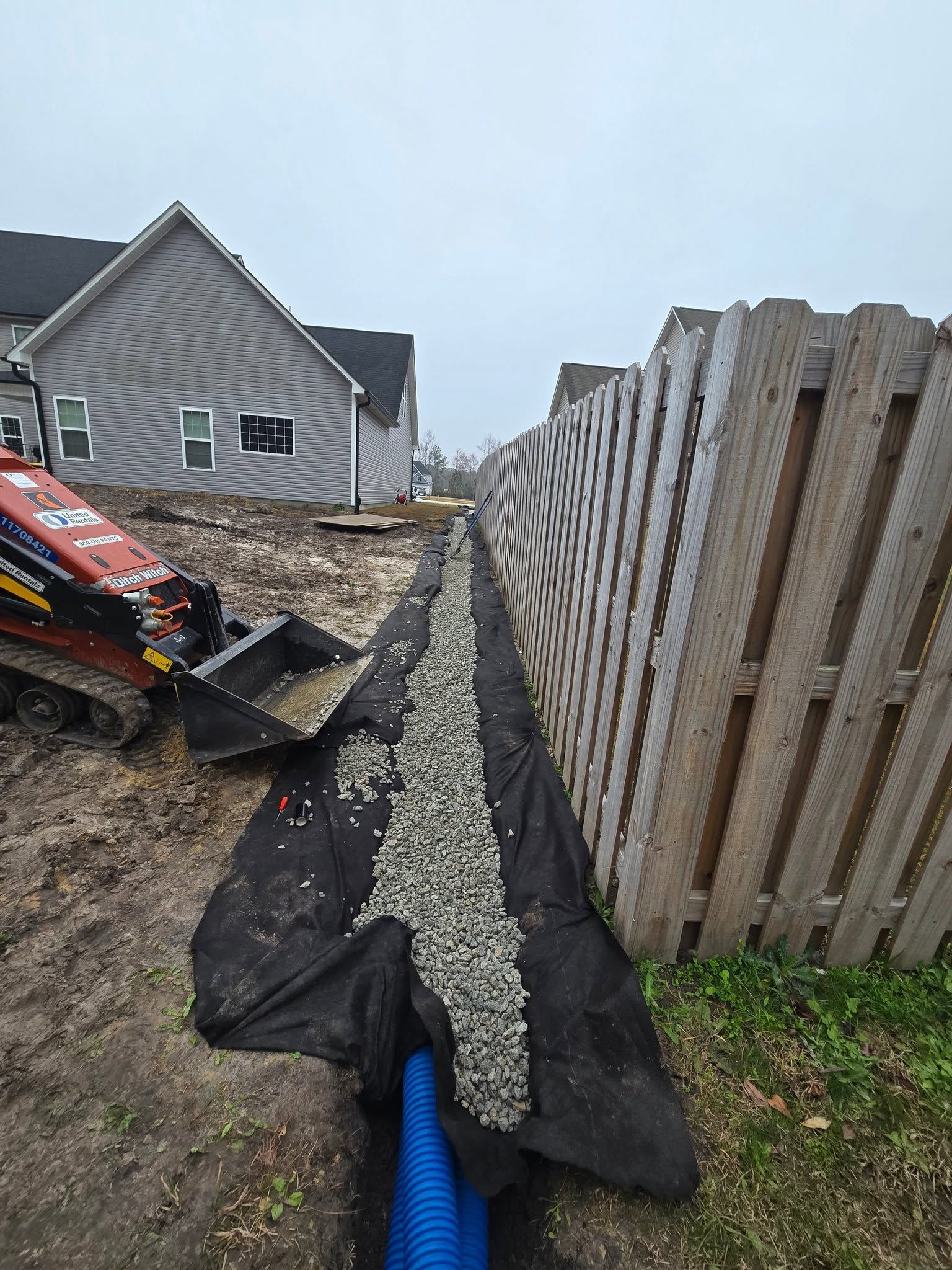
The installation process involves excavating a trench at the depth where groundwater typically saturates soil, lining it with filter fabric to prevent silt infiltration, placing perforated pipe surrounded by graded gravel, and routing the system to a discharge point where released water won't create new problems. Trench depth and routing depend on your property's elevation changes and soil permeability.
Arrange an on-site consultation to identify where subsurface water enters your property and which routing options your topography supports.
How French Drains Change Subsurface Water Movement
Once installed, the gravel-filled trench provides a preferential flow path that intercepts water moving through soil toward your foundation—water naturally flows toward the area of least resistance, and the high permeability of gravel surrounding perforated pipe creates a collection zone that captures groundwater before it travels further. The pipe conveys collected water to a discharge point downslope or into a drywell where it disperses into deeper, unsaturated soil layers.
After the system becomes functional, you'll notice foundation perimeters dry out even during extended wet periods, crawlspace humidity drops because exterior soil moisture no longer migrates through foundation walls, and landscape areas that previously stayed swampy become usable within a day of rain ending. Plants in formerly waterlogged zones show improved growth because root systems access oxygen again, and exterior foundation walls stop showing efflorescence or staining from constant moisture exposure.
French drain effectiveness depends on correct depth placement relative to your water table, adequate slope for gravity flow, and discharge to a location that doesn't create runoff problems elsewhere—undersized systems or those installed too shallow fail to capture water before it reaches the foundation, while systems without proper discharge planning just relocate the saturation problem to a different part of the property.
Common Questions About French Drain Installation
Subsurface drainage in eastern North Carolina must account for shallow water tables, clay soils that limit percolation, and limited elevation change that restricts gravity discharge options. These factors affect where French drains can be placed and how they're designed to function long-term.
What determines where French drains get installed on my property?
Drains are positioned upslope of the area you're protecting, at a depth that intercepts groundwater before it reaches foundation level, and routed to follow natural grade toward a discharge point that's lower than the collection trench—placement depends on where water enters your property and where gravity allows it to exit without pumping.
How deep do French drains need to be to intercept groundwater effectively?
Depth depends on your seasonal water table level and how far below grade your foundation or crawlspace floor sits—drains must be placed below the zone you're protecting but above the depth where soil becomes impermeable, typically between two and four feet in most residential applications depending on site-specific soil conditions.
When does a French drain system require a pump instead of gravity discharge?
Pumps become necessary when your property lacks sufficient slope for gravity flow to a suitable discharge point, when the protected area sits lower than all adjacent land, or when local regulations prohibit surface discharge and require connection to storm sewer systems that sit higher than the drain collection point.
What causes French drains to stop working after several years?
Silt infiltration through inadequate filter fabric clogs the gravel and pipe perforations, root intrusion blocks perforated pipe sections, or the discharge point becomes obstructed and backs water up through the system—proper installation with heavy-duty fabric and regular discharge point inspection prevents most long-term failures.
How do French drains integrate with other drainage improvements like roof runoff systems?
French drains handle subsurface groundwater while roof systems manage concentrated surface discharge—both can connect to the same discharge point or drywell, but they serve different water sources and are sized independently based on the volume each intercepts.
Patriot Property and Lawn Services LLC designs French drain systems after evaluating your property's water table behavior during wet conditions, not just during dry weather when problems aren't visible. Schedule a property assessment to determine where subsurface water causes your specific drainage issues.